Some links on this page are affiliate links. If you buy through them we may earn a small commission, at no extra cost to you. See our Affiliate Disclosure.
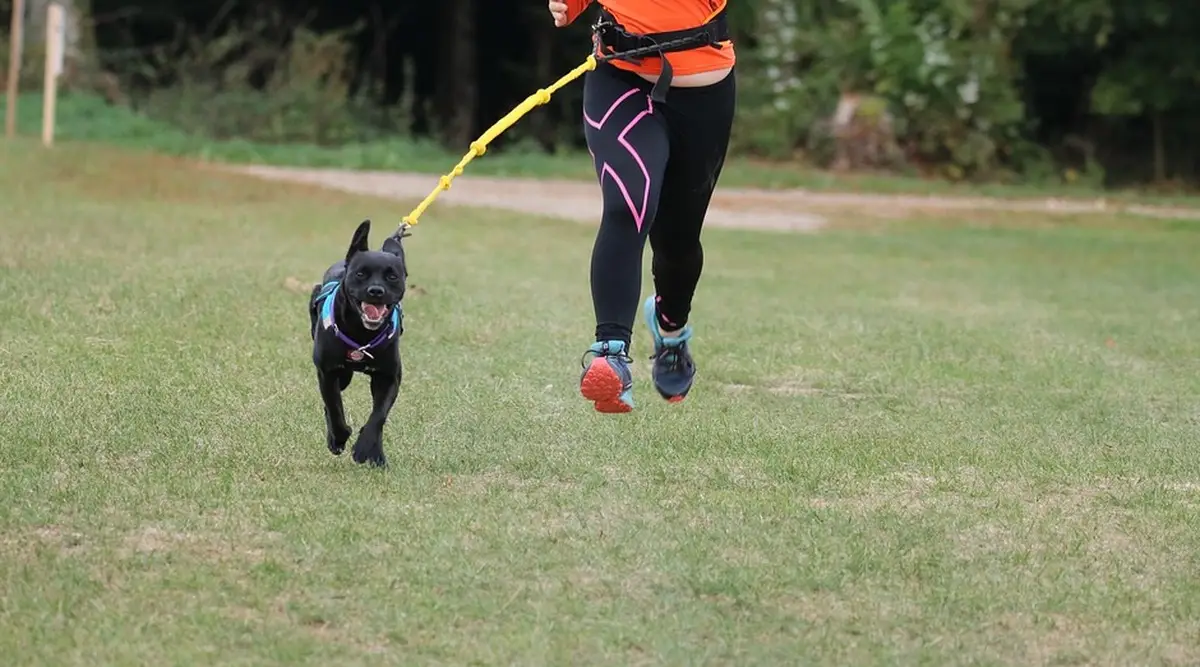
Most articles about hands-free leashes are about convenience: free hands for trekking poles, for a camera, for scrambling over rock.
That is real, but it is the smaller half of the question. Dog walking sends a large and rising number of American adults to the emergency room, and the most common injury they arrive with is one that a hands-free setup removes by design.
What is on this page
Are hands-free leashes worth it?
Probably, for most people, and only if it has a quick release.
The case is not about comfort. The most common dog walking injury treated in US emergency rooms is a finger fracture, and the largest study of hand injuries from leashes found that about three quarters of them happened when the hand or arm caught in the leash as the dog pulled. Clipping the leash to a belt removes that mechanism.
What it does not remove is the risk of being pulled off balance, and it takes away your ability to let go. That trade-off, and the one feature that manages it, is the rest of this article.
Said plainly up front: no study has compared hands-free leashes with handheld ones for injury rates. The reasoning below is drawn from injury mechanisms, not from a tested result. Anyone telling you hands-free is proven safer is going beyond the evidence.
What sends dog walkers to the emergency room
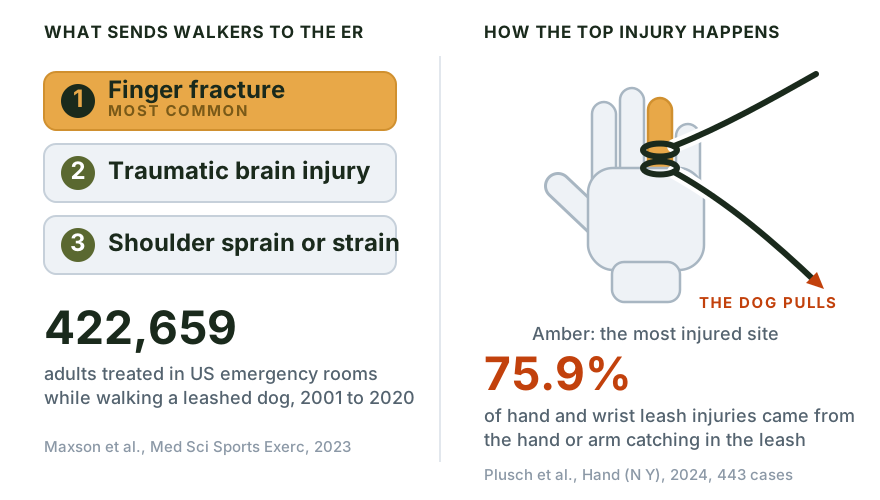
Researchers at Johns Hopkins analysed twenty years of US emergency department data through the National Electronic Injury Surveillance System, covering adults injured while walking a leashed dog.
| Finding | Figure |
|---|---|
| Adults treated in US emergency rooms, 2001 to 2020 | 422,659 |
| Change in annual incidence | 7,282 to 32,306, more than quadrupled |
| Three most common injuries, in order | 1. Finger fracture · 2. Traumatic brain injury · 3. Shoulder sprain or strain |
| Most common mechanism | Falling after being pulled by, tangled in, or tripped by the leash |
| Women | 75% of patients, and 50% more likely than men to sustain a fracture |
| Adults aged 40 to 64 | 47% of patients |
| Adults aged 65 and older | More than 3× as likely to fall, more than 2× to fracture, 60% more likely to sustain a traumatic brain injury |
Read the top injury again. Not a bite. Not a scrape. A broken finger.
That is a surprising result, and it is worth being precise about what it does and does not tell you. It tells you what people are treated for. It does not, on its own, tell you how the finger got broken.
How the most common injury actually happens
For that you need a different study. A hand surgery practice reviewed 443 patients who came in with a dog leash injury, and recorded the mechanism for each one.
| What they found | Figure |
|---|---|
| Injuries caused by the extremity catching in the leash while being pulled | 75.9% |
| Most commonly injured site | The ring finger, then the wrist, then the middle and little fingers |
| Most common injury type | Interphalangeal joint sprain, then fracture of a finger bone |
The authors’ own conclusion is unusually direct for a journal paper:
“A leash should never be wrapped around the hand or fingers, as a sudden pull can lead to the common types of injuries seen in our practice.” Plusch et al., Hand, 2024
Note the honest wrinkle: in the emergency department data, fracture ranks first, while in the hand clinic data, sprains slightly outrank fractures. Those are different care settings seeing different severities of the same accident, and both point at the same mechanism.
This is the actual argument for hands-free. A leash clipped to a belt cannot be looped around your fingers, so the injury pattern that fills hand clinics cannot happen that way.
What that means for going hands-free
Here is the reasoning laid out so you can judge it yourself rather than take it on trust.
The case for
It removes the top injury mechanism. You cannot wrap a waist-mounted leash around your fingers. The single most common injury in the emergency data, and three quarters of the hand injuries in the clinic data, come from exactly that.
It keeps both hands available. On uneven ground, hands are what turn a stumble into a recovery instead of a fall. Since falling is the mechanism the Johns Hopkins researchers describe, having both hands free to catch yourself is not a small thing.
Force arrives closer to your centre. A pull at the hips acts nearer your centre of mass than a pull on an outstretched arm. This is mechanical reasoning rather than a measured finding, and it is offered as such.
The case against
You cannot let go. This is the real trade-off and it deserves more weight than most articles give it. With a handheld leash, dropping it is always available: if your dog bolts at a road, at another dog, or toward a drop. Attached to your waist, you go where the dog goes unless you can release.
Tangling moves, it does not disappear. Tripping and tangling are named causes of leash-related injury in the veterinary literature. A line running from your waist sits differently around your legs than one held in a hand, which changes the tangle risk rather than removing it.
A hard pull loads your back. Without a shock-absorbing section, a sudden lunge transfers into your lower back and core instead of your arm. Again, mechanical reasoning, not a measured finding.
What is genuinely not known
The data cannot answer the question directly. The 2024 review in the Journal of the American Veterinary Medical Association notes that the available studies do not record the type of leash used at the time of injury, along with the dog’s size, breed and training status. So there is no dataset that could currently show whether hands-free walkers get hurt more or less often than handheld walkers.
The honest summary: the mechanism argument is sound, the outcome evidence does not exist.
The one feature that is not optional
If you go hands-free, this is the feature that decides whether it was a good idea.
| Feature | Why it matters |
|---|---|
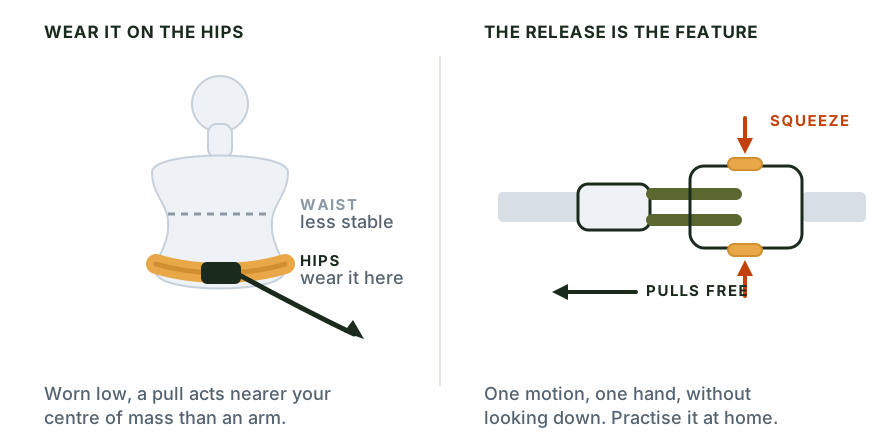
| Quick release | You must be able to detach in one motion, one-handed, without looking down. This is the direct answer to “what if my dog bolts”, and it is the difference between a hands-free leash and a tether |
| Bungee section | Absorbs a sudden lunge rather than transmitting it straight to your spine |
| Wide, padded belt | Spreads load across the hips instead of a narrow band at the waist |
| A traffic handle near the clip | Lets you take direct, short control at a road crossing or when passing another dog, without unclipping |
| Total length measured at full stretch | Decides whether the leash is legal where you are hiking. See the next section |
If a hands-free leash has no quick release, do not buy it. Everything else on that list is preference. That one is not.
The leash length trap nobody mentions
This is the part that catches people out, and it is worth knowing before you buy rather than after a ranger stops you.
In areas run by the National Park Service, federal regulation requires a pet to be restrained on “a leash which shall not exceed six feet in length.” That is a hard number, not a guideline.
A hands-free leash is easy to measure wrongly. The figure that counts is the total distance from your belt to the dog’s collar clip with the bungee at full stretch, because that is the length the dog can actually reach. A leash sold as a five foot line can exceed six feet once the shock section extends.
- Measure from the belt attachment point to the clip, with the bungee pulled out fully
- Check that figure against the rules for the specific place you are going
- Remember that state parks, county parks and city trails set their own limits, which may differ from the federal one
Buy for the strictest place you hike. A leash that is legal everywhere you go is worth more than one you have to leave in the car.
Who should think twice
Being straight about who this does not suit matters more than selling the idea.
| If | Then |
|---|---|
| Your dog pulls hard or lunges at wildlife | Fix the training first. Going hands-free amplifies a pulling problem, it does not solve it |
| You are unsteady on your feet, or recovering from an injury | A pull you cannot release is a worse risk than a leash you can drop |
| You hike where a bolt could be serious: cliff edges, roads, water | The ability to let go has real value, and you are giving it up |
| Your dog substantially outweighs what you can brace against | Momentum arriving at your waist is momentum you are going with |
Age deserves naming rather than tiptoeing around. The Johns Hopkins data shows adults aged 65 and over were more than three times as likely to fall and more than twice as likely to fracture. That does not rule out hands-free, and having both hands available may genuinely help. It does mean the quick release stops being a nice feature and becomes the whole point.
How to use one safely
- Practise the quick release at home until you can do it without looking
- Wear the belt low, on the hips rather than the waist, where you are more stable
- Keep the line short enough that it cannot pass behind your legs
- Take the traffic handle when passing other dogs, horses, bikes or a road
- Inspect the bungee and its stitching regularly, since that section takes the shock loads
- Never wrap any leash, hands-free or handheld, around your hand or fingers
Common questions
Are hands-free leashes actually safer?
They remove the mechanism behind the most common dog walking injury: the hand or fingers catching in the leash when a dog pulls, which accounted for 75.9% of hand and wrist leash injuries in one review of 443 cases. But no study has compared hands-free with handheld leashes for overall injury rates, and the available data does not even record which type of leash was in use. This is reasoning from mechanism, not a proven result.
What if my dog bolts?
This is the strongest objection and it is a fair one. It is why the quick release matters more than any other feature. If you cannot detach in one motion without looking down, you do not have a hands-free leash, you have a tether.
Is a hands-free leash legal on trails?
It depends on the total length. In National Park Service areas, federal regulation caps a leash at six feet. Measure yours from the belt to the clip with the bungee at full stretch, then check the rules for the specific area, because state, county and city land set their own limits.
Do I need the bungee section?
It is worth having. Without one, a sudden lunge transfers into your lower back rather than being absorbed. The trade-off is that a bungee adds length under load, which is exactly what the six foot rule measures.
Is the top injury really a broken finger?
Yes, in emergency department data. Across 422,659 adults treated in US emergency rooms between 2001 and 2020 for injuries while walking a leashed dog, finger fracture was the single most common injury, ahead of traumatic brain injury and shoulder sprain.
Can I use one for running as well as hiking?
Yes, and many are designed for it. The same features apply: quick release, bungee, belt worn on the hips. Running adds speed to any pull, which makes the release matter more, not less.
Continue exploring
Sources
- Maxson R, Leland CR, McFarland EG, Lu J, Meshram P, Jones VC, Epidemiology of Dog Walking-Related Injuries among Adults Presenting to US Emergency Departments, 2001 to 2020, Medicine & Science in Sports & Exercise, 2023. Injury total, incidence trend, injury rankings, mechanism, and the demographic risk figures for women and for adults 65 and older. Journal record · Johns Hopkins Medicine news release
- Plusch K, Givner D, Wiafe B, Lutsky K, Beredjiklian P, Hand and Wrist Dog-Leash Injuries in the Outpatient Setting: A Review of 443 Cases, Hand (N Y), 2024. The 75.9% mechanism figure, the injured sites and types, and the recommendation never to wrap a leash around the hand or fingers. Full text, open access
- Rosa C, Buckley G, Leash-related injuries associated with dog walking: an understudied risk for dog owners?, Journal of the American Veterinary Medical Association, 262(7), 2024. Tripping and tangling as named causes, and the absence of any record of leash type, dog size, breed or training status in the existing data. PubMed record
- US National Park Service pet regulation, 36 CFR 2.15(a)(2), the six foot maximum leash length. Text at Cornell Legal Information Institute
HikeBeyond is an information resource, not medical or veterinary advice. Leash length rules vary by location, so check the regulations for the area you are hiking.
Save this for later
Pin this to come back to it, or to send it to someone heading out with a dog.