Some links on this page are affiliate links. If you buy through them we may earn a small commission, at no extra cost to you. See our Affiliate Disclosure.
A dog coat is a layer of insulation. That single fact settles most of the questions people have about them, including the two that matter most: insulation only works when it is dry, and it only helps a dog that is not already well insulated.
What is on this page
Does my dog need a winter coat?
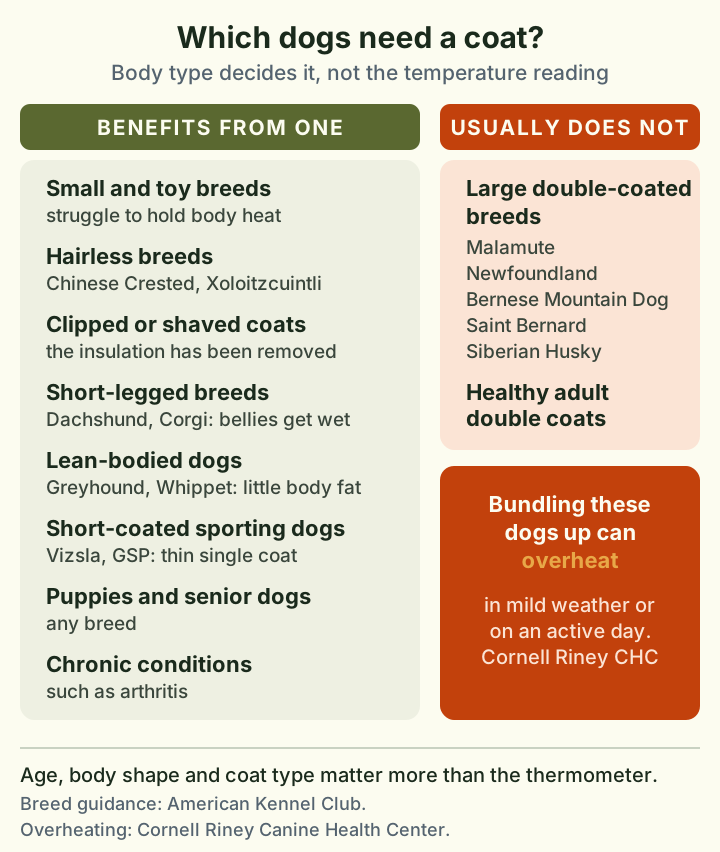
Some dogs, yes. Some dogs, definitely not. It depends on coat type, body shape, size and age far more than on the temperature reading.
According to the AKC, dogs that benefit include:
- Small and toy breeds: they struggle to maintain body heat
- Hairless breeds: American Hairless Terriers, Xoloitzcuintlis, Chinese Cresteds
- Dogs with clipped coats: Poodles and anything recently shaved
- Short-legged breeds: Basset Hounds, Dachshunds, Corgis, whose bellies get wet in snow
- Lean-bodied dogs: Greyhounds, Whippets, Azawakhs
- High-energy short-coated sporting dogs: Vizslas, German Shorthaired Pointers
- Puppies and senior dogs of any breed
- Dogs with chronic conditions such as arthritis
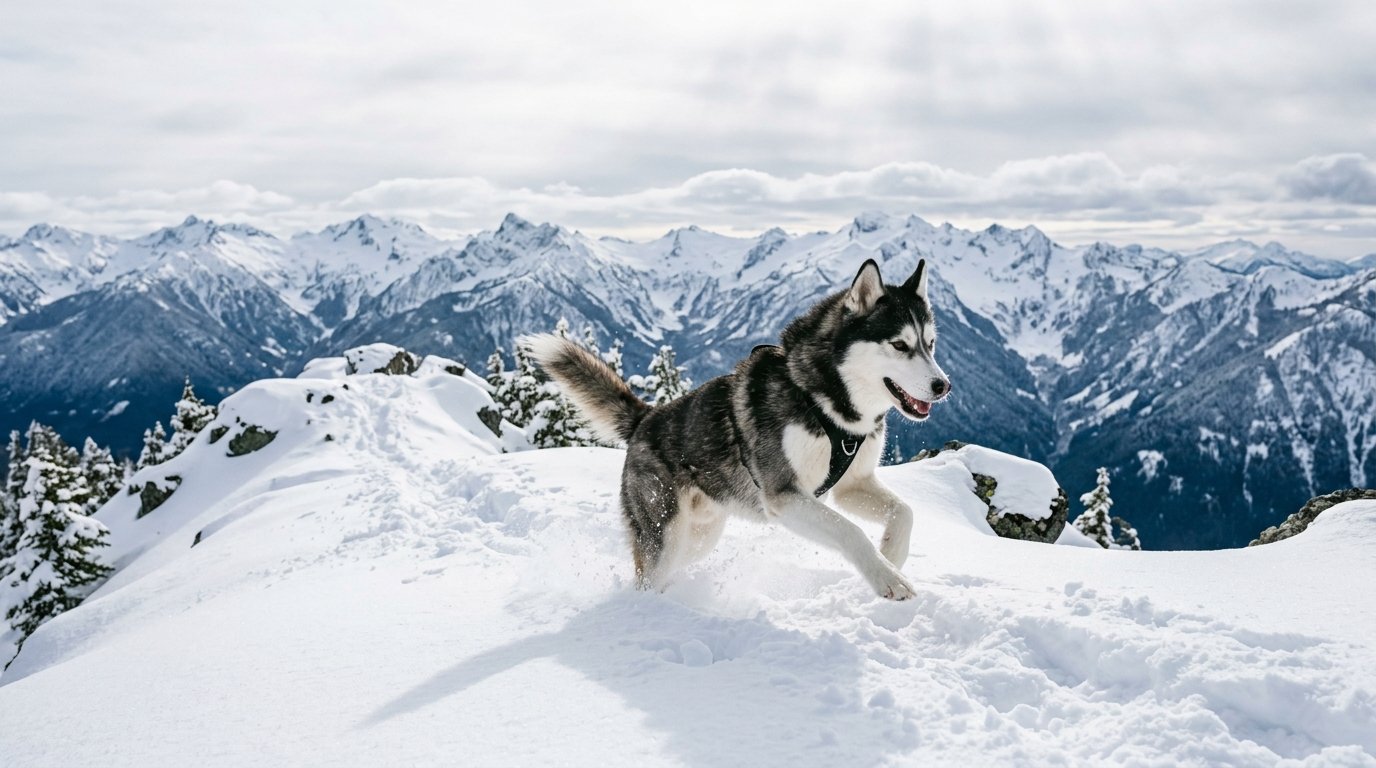
And dogs that generally do not: large breeds with thick double coats: Malamutes, Newfoundlands, Bernese Mountain Dogs, Saint Bernards, Siberian Huskies, and healthy adult double-coated dogs generally.
Putting a coat on a double-coated northern breed can work against it. These dogs carry their own insulation and are built for cold. Cornell’s Riney Canine Health Center says double-coated breeds such as Huskies, Malamutes, Labradors and Golden Retrievers are “often well-equipped to handle cold weather and may even overheat if bundled up during mild temperatures or increased activity.”
Why size matters more than people expect
Small dogs lose heat faster than large ones, and the reason is geometry rather than toughness.
A small body has more surface area relative to its mass. Heat leaves through the surface and is produced by the mass, so the smaller the animal, the faster it loses heat it cannot replace. A Chihuahua is not being dramatic.
The same logic explains why lean dogs feel cold sooner. Less body fat means less insulation and less thermal mass.
The thing most coats get wrong: wet
Insulation works by trapping air. Wet insulation does not trap air, water conducts heat away from the body far faster than air does.
A soaked coat stops doing the job it was bought for, because it holds cold water against the skin and blocks the fur from lofting. How much worse than no coat at all it leaves a dog is not something we found measured, so treat it as a reason to keep the coat dry rather than as a number.
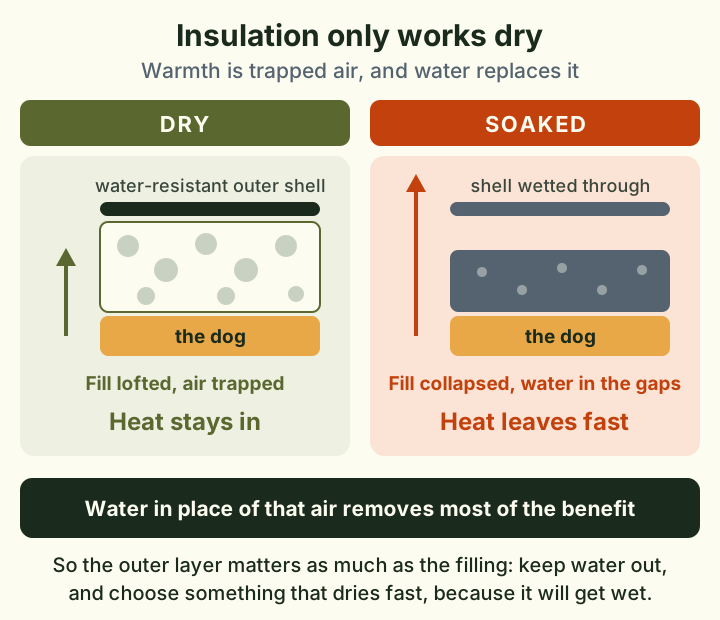
This is why the outer layer matters as much as the filling:
| What to look for | |
|---|---|
| Outer | Genuinely water-resistant or waterproof, not just “showerproof” |
| Fill | Whatever it is, it only works while it holds air, so the question is how the coat copes with getting wet |
| Drying | Something that dries fast, since it will get wet eventually |
| Belly coverage | Especially for short-legged dogs, the AKC notes their bellies get wet in snow |
The AKC also warns that damp coats can become a breeding ground for bacteria and recommends washing them regularly, a small maintenance point that is easy to ignore.
Fit
The same principle as a harness: it must not restrict movement.
- Measure the length of the body and around the widest part of the chest before buying, which is what AKC advises rather than guessing from a size label
- The dog can walk, run and play normally in it
- Nothing catches, dangles, or creates an entanglement hazard on brush
- It does not rub at the armpits or the base of the neck
- It works over or under your harness without bunching, decide which and check
- Your dog can toilet without soiling it
Try the harness and coat together before the first cold hike. Discovering they do not work together at the trailhead is a poor start to a winter walk.
Coverage: how much do you need?
| Style | Covers | Best for |
|---|---|---|
| Vest or blanket style | Back and sides | The common shape, and the easiest to fit over a harness |
| Full coat with a belly panel | Back, sides, underside | Short-legged dogs, whose bellies AKC notes get wet in snow |
| Bodysuit or snowsuit | Body and legs | Lean-bodied or hairless dogs, which is AKC’s own recommendation |
More coverage is not automatically better. A garment your dog will not tolerate, or which restricts its stride, is worse than a simpler one it forgets it is wearing.
How cold is too cold?
This is where a gear article should stop and hand over.
The AKC advises that below 20°F windchill, playtime should be kept short, sessions of 15 to 20 minutes. That is activity guidance rather than a safety threshold.
Recognising when a dog is genuinely too cold, and what to do about it, is a medical question rather than a clothing one. It is covered separately in Hypothermia in Dogs: Safe Winter Hiking Temps.
A coat changes the margin. It does not change the weather. Shorter routes, checking conditions, and turning back are what actually manage cold.
Common questions
Does my Husky need a coat?
Generally no. The AKC lists Huskies, Malamutes, Newfoundlands and similar among dogs that do not need coats, and Cornell’s Riney Canine Health Center adds that double-coated breeds may overheat if bundled up in mild temperatures or during increased activity.
Is a wet coat better than no coat?
Often not. Insulation works by trapping air, and wet material does not. A soaked coat can hold cold water against the skin. This is why a water-resistant outer layer and a synthetic fill matter more than raw warmth ratings.
Down or synthetic?
Honestly, we could not find a clean measured comparison for dog coats, so treat the usual “synthetic always wins” line with some caution. What is not in doubt is the mechanism: any fibrous insulation works by holding still air, and water in place of that air removes most of the benefit. On a hike the dog will meet wet grass, snow and puddles, so the questions worth asking are how well the outer keeps water out and how fast the thing dries.
Coat over or under the harness?
Either can work, but decide and test it at home. Over is usually easier to remove; under avoids the coat shifting when the leash is pulled. What matters is that neither bunches or rubs.
At what temperature should I put a coat on?
There is no single number, because it depends on the dog’s coat, size, age and condition as much as the thermometer. The AKC does advise keeping play sessions short, 15 to 20 minutes, below 20°F windchill. For recognising cold-related illness, see Hypothermia in Dogs.
Continue exploring
Sources
- American Kennel Club, Does My Dog Need a Winter Coat? which breeds and body types benefit and which do not, including Corgis and the point that short dogs’ bellies get wet on snow and ice, the 20°F windchill activity guidance, measuring the body length and the widest part of the chest, the snowsuit or bodysuit recommendation for lean and hairless dogs, and the damp-coat hygiene warning.
- Cornell University College of Veterinary Medicine, Riney Canine Health Center, Winter Safety, that double-coated breeds are often well equipped for cold and may overheat if bundled up in mild temperatures or during increased activity, and that dogs exposed to rain, snow or prolonged wetness may benefit from a coat to stay dry and warm.
HikeBeyond is an information resource, not veterinary advice. For cold-related illness and safe temperature limits, consult your veterinarian.